
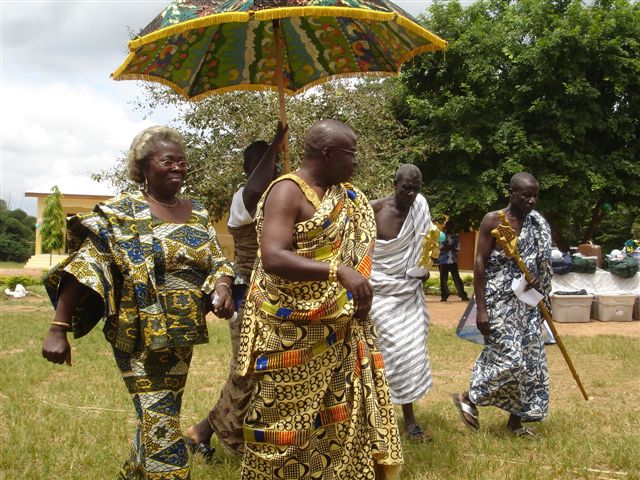
Are there ways of viewing race differently throughout the world? If race, even contrary to popular science, is so naturally based, how is it possible for other people to base race in a geopolitical or class status? (Ex: Andes & Ghana - click to view larger!).
So I feel the answer to the first part of this question is obviously yes - there ARE different ways of viewing race throughout the world. There has to be! Just as we are so affected by our own cultures, other people have to be affected by theirs. And as we have a particular view about race - both consciously and subconsciously instilled in us - other cultures will have particular views about race. Therefore, views on race are bound to be different throughout the world.
What I wanted to touch on is related to what Hartigan mentioned about how other cultures view race (if you don't know, I'd much rather hear and learn about other cultures than my own...); specifically, he gave the examples of people from the regions of the Andes and Ghana. For them, he said views on race are not so much naturally based, but (at least also) materially based. A white person was someone with status, power, privilege and - material wealth!. I thought this was interesting to contrast with our own culture because we focus on such a "natural" aspect of race. We tend to look at skin color and a variety of physical features and then attempt to apply a set of stereotypes and behaviors to that person. In addition to this & as a very contemporary form, we are looking at the genetics of race - attributing to certain diseases to biology, which is characteristic of a certain group.
However, in Andes and Ghana - you are white especially if you have material wealth. That is, you could be white, albino, light skinned, dark skinned, and anything in between - but if you possess material wealth, you are categorized as white. I just think this is interesting and so difference from out own conceptions of race! It is so different I'm not sure I can wrap my head around completely! In our culture, would a rich black person be considered white? Maybe at some superficial level (I've heard people say, "Yeah, that kid is black but he is so white bc of his personality and who he hands out with"), but honestly - I don't think so. We characterize especially by their skin color.
Would the man in the right picture above be considered white, even if he is from Ghana (I googled Ghana, so of course that may not be Ghana)? He looks like he has material wealth - or is it the idea that any foreigner who has wealth is white? I wonder what they think.
Anyways, is this a legitimate way of viewing race - as geopolitical or with respect to status and material wealth? Or is it just material wealth and people categorize them as "white" because white people visiting foreign countries tend to have wealth? It's not how we tend see race - as natural - does that make it less legitimate? It seems different to me. Is this race or just ways of categorizing people?

I think the ways people use racial terminology in other countries are, in some respects, influenced by how much colonialism and globalization have touched their societies. I think the reason why some of the people you have mentioned associate white with wealth and status and not as much with skin color and other physical features may be because they were once dominated by white foreigners who were all probably perceived as wealthy and powerful. So over time, the word "white" comes to mean power and wealth, not skin color or physical differences between people. But this is definitely just a theory, for now.
ReplyDeleteNow as for your question, is viewing race as a measure of material wealth legitimate, I would say I don't know, but in these examples that you have pointed out, I don't think the people use "race" as we know it to imply wealth. Would calling a person, who is rich, rich and one, who is poor, poor be implying or using race? I mean these people's meaning of "white" is definitely not our meaning and implication of "white," at least not anymore. To them, the word "white" has a similar meaning to the word "rich" to us. Hypothetically, is it logical for people from a totally different culture to come and interpret our word "rich" to mean something else just because our word "rich" coincides with their word for that "something else"? No, because we did not imply their meaning of the word "rich" when we use the word in our language. So I think we have to be careful when we try to understand the languages and cultures of other societies. We can't impose our own interpretation onto the words they use just because those words mean something in our society.
So, in conclusion, I don't think these people are doing race when they use the word "white" to imply wealth or economic status. They are not viewing race in a different way from us because they are not really viewing race at all, at least not when they use the word "white" to mean rich.
Chris, I agree with Thoa on this matter. It is one of globalization and our need to find a "new" way to classify things because the old system does not cut it anymore. However, the system used in the Andes (one with which I am very familiar, so I will avoid the Ghanian issue) is based in historical roots that persist in the present day. At the beginning, the conquest was conducted solely by white males, and the political and social constructs are still determined by the oligarchy that they left behind. WHen 10% of the population controls 70% of the wealth in a country, and they are by and large white then it becomes natural for one to associate whiteness with material wealth. The problem that I believe you are finding with this geopolitical definition of race is that it does not fit within "our" paradigm. However, it seems only natural to me. In the future we will have even more questions like this to confront because the matter of whether or not "whiteness" in this sense can be translated to women is an issue in the Andes and throughout Latin America. There have been a small number of female presidents in the region, but the women who make money in entertainment do not seem to fall into the "white" category, even Shakira who hails from the region (Colombia). The role of gender (which is a whole other issue) is just the beginning. Soon we will all have to find new ways to grapple with the geopolitical phenomenon. As for its validity, I do not think we can reject it; but it will be hard to accept.
ReplyDelete