Our discussion last Thursday (2/25) about the Orokaiva and how they create friendships or trade relationships etc got me thinking.
I used to get into huge debates with a friend I used to have over what friendship is. Confusing...but I'll explain. He hated it whenever anyone would get him a christmas gift or a birthday gift--even if someone just bought him a drink at the bar, because he felt that he would ultimately have to owe it back. He would explain that friendships are all about owing one another and making sure that the balance is kept. I agreed with him to a certain degree, however I think the perspective is off. I agree that if the scale is tipped far to one side in a relationship that one person is probably doing all the work and you may not be dealing with a true friend after all. BUT, on the other hand, if I am out for a friends birthday, I buy them a drink, or a gift or whatever, because I WANT to--not because I am hoping that in the future they remember and get me one as well. So there is a mix between keeping things even between friends but also the idea that I do things for my friends simply because they are my friend.
What do you all think? Is it more of an I.O.U. kind of world, or how do we know when something is owed/expected in exchange? I mean, no body would want the broken dry-erase marker!
Sunday, February 28, 2010

Thursday, February 25, 2010
Mistrust in Healthcare System
Today’s discussion in class got me thinking about the relation between race and healthcare. We talked specifically about how there is an inequality in the health of whites vs. minorities. Dr. Fathman also brought up the issue of the general mistrust by minorities of healthcare providers (particularly African Americans following the Tuskegee Syphilis Experiment). This idea of mistrust truly intrigues me. The entire discussion made me think about the specific relationship between the race of the healthcare provider (most often a physician) in relation to the race of the patient. Specifically—Do minorities trust healthcare providers of their same race? Or is there some level of conflict involved? (I.E., do they feel betrayed?)
I feel that the idea of mistrust is a huge issue regarding minorities and their ability and/or desire to receive healthcare. I feel that many minorities feel that the health care system does not meet their needs. Additionally, I feel that minorities often feel the need to advocate for themselves because they feel that the healthcare system has suspect motives.
In response to my question, I can see two different possibilities: (1) minority patients feel safe and cared for when their physician is the same race or (2) minority patients are even less willing to see physicians of their same race because they feel a sense of betrayal, as if the individual has adopted a white perspective; therefore, these physicians should be trusted even less so.
The first option makes general sense. It makes sense that an individual who feels mistrust towards a majority white physician may feel more trust towards a physician who shares the same race. The sharing of race between the physician and patient allows for a sense of comradery. The patient ultimately believes that the physician has their best interests at heart and will provide the best care possible.
On the other hand, I have often heard about how minority groups turn their backs on individuals who assimilate into the majority. Could it be possible that minority patients would be even less trusting of physicians who they feel have betrayed their race?
What do you all think?
Wednesday, February 24, 2010
Tim Wise
I'm sorry most of you missed Time Wise's talk. He's a really dynamic speaker with a lot of important things to say about race in America in the 21st C (and the past).
One of the topics he addresses was the myth of a "post-racial" America. His main argument in this regard is that not only is there still racism in the US, but that we don't solve that or any problem by ignoring it or pretending we're past it or not naming it. His call to action: name the problem. Do not dance around it. Call it what it is.
I have put a link to his website on our blog under the tab "links to other sites." I recommend watching some of his videos, too.
Also, the exhibit is pretty cool. It's at the history museum until April 4. I highly recommend it.
One of the topics he addresses was the myth of a "post-racial" America. His main argument in this regard is that not only is there still racism in the US, but that we don't solve that or any problem by ignoring it or pretending we're past it or not naming it. His call to action: name the problem. Do not dance around it. Call it what it is.
I have put a link to his website on our blog under the tab "links to other sites." I recommend watching some of his videos, too.
Also, the exhibit is pretty cool. It's at the history museum until April 4. I highly recommend it.
Tuesday, February 23, 2010
Participation in Antiracist workshops
Some of the sample ethnographies that Hartigan uses in the first few chapters of his book are accounts document antiracist workshops. I am curious as to if anyone in the class has ever participated in one of these? and if you have, how did your experience compare to the text? And, on a personal level, does this seem to you to be a viable substitute for something like an international or multicultural festival?
Personally, it has always been a significant point of those who raised me and educated me through childhood to ensure that I was aware that my environment was "filled with diversity." Due to this, the discussion of race was not a prevalent one, and the idea of an antiracist workshop would have appalled the administration and the community because such a multicultural and diverse community would not be in need of such an event. Instead, I experienced monthly "multicultural nights" where the students and their families would bring food, music, and dance from their culture and share it with the rest of us. While I learned a lot, I am pretty sure that this is not "doing race" according to Hartigan. Rather, it seems to be finding a way to avoid doing race at all. Similarly, I have been involved in the Festival of Nations here in St. Louis for the past two years due to my internship and have found a more "grown up" version of the exact same construct, one which avoids race but champions the beauty of each nation or ethnicity as distinct. I have had this idea in my head for a while, but I think that now might be an even more appropriate time since some of you have been at the Discussion Circle this evening at the exhibit at the History Museum. I must conclude, even without being at an antiracist workshop, that international and multicultural festivals are constructs aimed at "colorblindness" that really end up doing a disservice to our youth and the rest of the population because it restricts us from examining one of the most important socially/culturally constructed matters that we face on a daily basis: race.
Sunday, February 21, 2010
Is Awareness Enough?
I know I am jumping back a bit with this topic, but I still cant help but wonder how to fix this problem of racism. Now that we have been discussing and analyzing society, its issue of colorblindness, and how segregated we have become (Hartigan points out that studies have shown that America is as segregated now as it was during the time of Martin Luther King Jr... a fact that has stuck with me and makes me think as I walk around during the day) I am left wondering, what now? How do we fix this? How do we stop pretending like our world is full of color when it is really quite black and white?
Usually, when you have a social issue or a problem that needs fixing, a lot of time it is awareness that brings about the most change. When clubs at SLU try to raise money for a certain cause, generating awareness is generally the area that requires the most time. I wonder if this could apply to colorblind racism. Would making people aware that colorblindness exists help facilitate social change? The fact that racism exists today subtly makes it difficult. I think that our class proves that education is crucial to understanding how our society has evolved to where it is, but we have yet to understand how to catalyze change. I think that minorities are very aware of racial tension, so it is necessary for the majority to stop ignoring it and fix it. For example, I think that SLU writing the article about the student who made the comment about "lynching" someone had a very large awareness component.... yet little is being done to fix the situation. If more racial issues were written about blaming the majority for racism, would people listen if they do not see it due to being colorblind?
Usually, when you have a social issue or a problem that needs fixing, a lot of time it is awareness that brings about the most change. When clubs at SLU try to raise money for a certain cause, generating awareness is generally the area that requires the most time. I wonder if this could apply to colorblind racism. Would making people aware that colorblindness exists help facilitate social change? The fact that racism exists today subtly makes it difficult. I think that our class proves that education is crucial to understanding how our society has evolved to where it is, but we have yet to understand how to catalyze change. I think that minorities are very aware of racial tension, so it is necessary for the majority to stop ignoring it and fix it. For example, I think that SLU writing the article about the student who made the comment about "lynching" someone had a very large awareness component.... yet little is being done to fix the situation. If more racial issues were written about blaming the majority for racism, would people listen if they do not see it due to being colorblind?
Saturday, February 20, 2010
Limitations of Science
Another discussion question of mine stems from our talk in class about biology and science being the root of race. In Gould's article, he talks about the science that Blumenbach uses and his attempts at the time to be objective and unbiased (though we now know that that didn't work out as planned!). My question is, what are some of the limitations of "science" as we know it today, if any? Also, mustn't there be some limitations that we aren't aware of, considering the narrow scope of the work of early folks like Linnaeus and Blumenbach?
Certainly it's almost impossible to see any sorts of error that might arise in the future regarding scientific research. However, I think it's important that more people consider the fact that there MIGHT be an error--in some ways, we haven't changed much since the Enlightenment and live in almost a positivist culture that places science above all. Simply acknowledging error might not take science of the plane of absolute truth; however, it may allow for others to question the foundation of thinking and knowledge that is prevalent today. Scientific research has, of course, allowed for much improvement and innovation in humanity, but it must be taken as part of the web that forms when considering complicated and abstract notions like race.
What do you guys think? Do you think most people still consider scientific research as having the ultimate truth?
Identity and Ancestry
Many Americans look back on their ancestry to develop a greater sense of identity, rather than be mixed in along with the melting pot that composes this country. White Americans in particular claim ancestry in many different European countries spanning centuries of time before arriving in the United States. As I've mentioned in class, I'm mostly Czech and German (I think one of my relatives lived in the Alsace-Lorraine region in France too), and my family has only lived in this country for a few generations. I find this history fairly interesting, and someday might hope to travel to these areas (maybe to find my unknown twin?).
Do you guys think, though, that a sense of identity is strengthened upon knowing the origin of your ancestors? If so, how far back in time should we go to create this sense of identity?
As I said, it all intrigues me; yet even if I somehow look more like the folks in that region, I don't think it holds any special meaning in my heart as far as my "roots" or sense of identity is concerned. How do you guys feel?
Thursday, February 18, 2010
Discussion Question: Race as Geographical

Are there ways of viewing race differently throughout the world? If race, even contrary to popular science, is so naturally based, how is it possible for other people to base race in a geopolitical or class status? (Ex: Andes & Ghana - click to view larger!).
So I feel the answer to the first part of this question is obviously yes - there ARE different ways of viewing race throughout the world. There has to be! Just as we are so affected by our own cultures, other people have to be affected by theirs. And as we have a particular view about race - both consciously and subconsciously instilled in us - other cultures will have particular views about race. Therefore, views on race are bound to be different throughout the world.
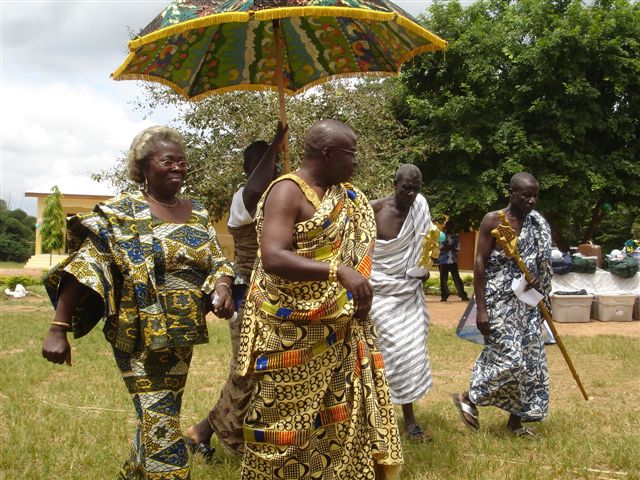
What I wanted to touch on is related to what Hartigan mentioned about how other cultures view race (if you don't know, I'd much rather hear and learn about other cultures than my own...); specifically, he gave the examples of people from the regions of the Andes and Ghana. For them, he said views on race are not so much naturally based, but (at least also) materially based. A white person was someone with status, power, privilege and - material wealth!. I thought this was interesting to contrast with our own culture because we focus on such a "natural" aspect of race. We tend to look at skin color and a variety of physical features and then attempt to apply a set of stereotypes and behaviors to that person. In addition to this & as a very contemporary form, we are looking at the genetics of race - attributing to certain diseases to biology, which is characteristic of a certain group.
However, in Andes and Ghana - you are white especially if you have material wealth. That is, you could be white, albino, light skinned, dark skinned, and anything in between - but if you possess material wealth, you are categorized as white. I just think this is interesting and so difference from out own conceptions of race! It is so different I'm not sure I can wrap my head around completely! In our culture, would a rich black person be considered white? Maybe at some superficial level (I've heard people say, "Yeah, that kid is black but he is so white bc of his personality and who he hands out with"), but honestly - I don't think so. We characterize especially by their skin color.
Would the man in the right picture above be considered white, even if he is from Ghana (I googled Ghana, so of course that may not be Ghana)? He looks like he has material wealth - or is it the idea that any foreigner who has wealth is white? I wonder what they think.
Anyways, is this a legitimate way of viewing race - as geopolitical or with respect to status and material wealth? Or is it just material wealth and people categorize them as "white" because white people visiting foreign countries tend to have wealth? It's not how we tend see race - as natural - does that make it less legitimate? It seems different to me. Is this race or just ways of categorizing people?
Tuesday, February 16, 2010
Discussion Question: Is It Possible to Ignore Race?
On page 63, Hartigan says, “At the same time, in a contrary gesture, the inherent instability and even arbitrariness of racial classification could as well lead to the opposite conclusion: that we should entirely ignore race altogether, adopting something like the “color-blind” approach discussed in Chapter 1.” My question is, is it even possible to “entirely ignore race altogether”? And if so, isn’t this different from the colorblind approach?
I was kind of confused when Hartigan mentioned this, because I don't think it's possible for us to ignore race altogether - at least within Western culture. The way we see race is so ingrained in us that it takes place even at an unconscious level. I think the only way to "ignore" race would be not to see it at all - that is, we would have had to have been raised in a culture that doesn't see racial categories... at least the way we define them.
He says this would be adopting something like the color-blind approach mentioned in chapter 1, but I disagree with that mentality. I think ignoring race and color-blind racism are two different things - at least how I understood it. Ignoring race would actually be ignoring it - NOT seeing it, not paying attention to it, not even realizing it. Color-blind racism, on the other hand, is knowing that it's there but not actively applying it to our world consciously... like Hartigan said, whites disagree there are real racial disparities, but the categories and classifications that reinforce these categories is still there. I guess the way I viewed it is 2 separate ways.. one would be not seeing race at all/completely ignoring it, whereas color-blind racism is claiming not to believe in it, but it is still obviously there. I don't even believe the former is an option in our culture, because of how instilled in us racial categories really are.
Am I interpreting Hartigan wrong or did you interpret it in a different way? Rather, what's your opinion on this matter - you don't even need to reference Hartigan. What do YOU think?
I was kind of confused when Hartigan mentioned this, because I don't think it's possible for us to ignore race altogether - at least within Western culture. The way we see race is so ingrained in us that it takes place even at an unconscious level. I think the only way to "ignore" race would be not to see it at all - that is, we would have had to have been raised in a culture that doesn't see racial categories... at least the way we define them.
He says this would be adopting something like the color-blind approach mentioned in chapter 1, but I disagree with that mentality. I think ignoring race and color-blind racism are two different things - at least how I understood it. Ignoring race would actually be ignoring it - NOT seeing it, not paying attention to it, not even realizing it. Color-blind racism, on the other hand, is knowing that it's there but not actively applying it to our world consciously... like Hartigan said, whites disagree there are real racial disparities, but the categories and classifications that reinforce these categories is still there. I guess the way I viewed it is 2 separate ways.. one would be not seeing race at all/completely ignoring it, whereas color-blind racism is claiming not to believe in it, but it is still obviously there. I don't even believe the former is an option in our culture, because of how instilled in us racial categories really are.
Am I interpreting Hartigan wrong or did you interpret it in a different way? Rather, what's your opinion on this matter - you don't even need to reference Hartigan. What do YOU think?
Monday, February 15, 2010
A Late Response to Dr. West's Speech
So this post is actually taken from a discussion I had with a professor who also attended Dr. West's meeting. He wanted me to post this on facebook and I thought it would be more appropriate and private if I post it here instead. Forgive me if some of the things included in this post overlaps with Professor Fathman a bit.
"I am very glad I went to the event yesterday. I didn't know what I was in for, but it was certainly a pleasant surprise. I thought Dr. West's speech was very moving and insightful.
He made it so that everyone can feel personally involved, whether you are a person of color or not. It is about being a human and self-examining our lives. I know I am guilty of just being too self-absorbed with college, work, and my future all the time.
I remember him talking about paideia. I think my classes this semester have definitely led me more in this direction. They have particularly challenged me to think more creatively and critically about all aspects of life. And as I think and observe more, I realize that the world is infested with complicated problems that I never knew existed.
I was also surprised when Dr. West compared racism to terrorism. I never thought of racism in that way before until last night. The similarities between them are a bit shocking. The analogy definitely helps bring our the sense of urgency to solve the issue of racism in our society that has long been overdue.
Dr. West also mentioned the case of a mother whose 14 years old child was lynched (I think it was Emmett Till). I remember seeing the before and after picture of Emmett when I was studying the civil rights movement in high school. Till this day, I still remember clearly the horrible after picture of his face so this example that Dr. West brought up really moved me.
I was also surprised to hear Dr. West criticizing President Obama. I guess I had the prenotion that all African Americans think President Obama can do no wrong, which I didn't realize I have until yesterday. His criticism made me re-examine my own beliefs about President Obama. Obama always sounds so "right" when he speak that I guess I sometimes overlook his actions.
But then again, Dr. West also sounds really "right" when he speak so I think I need to think more about his speech before I make an evaluation on it or on him as a person."
"I am very glad I went to the event yesterday. I didn't know what I was in for, but it was certainly a pleasant surprise. I thought Dr. West's speech was very moving and insightful.
He made it so that everyone can feel personally involved, whether you are a person of color or not. It is about being a human and self-examining our lives. I know I am guilty of just being too self-absorbed with college, work, and my future all the time.
I remember him talking about paideia. I think my classes this semester have definitely led me more in this direction. They have particularly challenged me to think more creatively and critically about all aspects of life. And as I think and observe more, I realize that the world is infested with complicated problems that I never knew existed.
I was also surprised when Dr. West compared racism to terrorism. I never thought of racism in that way before until last night. The similarities between them are a bit shocking. The analogy definitely helps bring our the sense of urgency to solve the issue of racism in our society that has long been overdue.
Dr. West also mentioned the case of a mother whose 14 years old child was lynched (I think it was Emmett Till). I remember seeing the before and after picture of Emmett when I was studying the civil rights movement in high school. Till this day, I still remember clearly the horrible after picture of his face so this example that Dr. West brought up really moved me.
I was also surprised to hear Dr. West criticizing President Obama. I guess I had the prenotion that all African Americans think President Obama can do no wrong, which I didn't realize I have until yesterday. His criticism made me re-examine my own beliefs about President Obama. Obama always sounds so "right" when he speak that I guess I sometimes overlook his actions.
But then again, Dr. West also sounds really "right" when he speak so I think I need to think more about his speech before I make an evaluation on it or on him as a person."
Black History Month
My second discussion question wondered about the different opinions about historical events related to race such as Black History Month. Do you think celebrations like these are legitimate or necessary considering what we've discussed about race? What sorts of people do you think might oppose this and why?
I went to a high school with a large black population, making it quite different from other public schools in my small city. Black History Month was always a big deal: some classes would base projects off of it, and there were always big displays in the hall. However, there was always some sort of discussion surrounding it: why was it that Bosse High focused on it so much, while other local high schools didn't? Does having a large black population mean that there must be more focus on it? Or, perhaps more accurately, does having a small black population mean that there should be less focus on it?
The dialogue that surrounded its focus at Bosse crossed both sides. Some blacks felt that it was absolutely necessary because of the textbooks' neglect of some events that are remembered at the time; other blacks and some whites felt like it wasn't a big deal and didn't care whether or not it was celebrated. I remember some of my white classmates, though, objecting to it: "isn't it racist to celebrate black history? What if we had a 'white history month', would people be OK with that?" Even some of the teachers wondered why it was focused on so much--if most of the students didn't care, then why make such an effort to display posters, have assemblies, etc...
Many things were black and white at that school, as was this issue. Racial designations were solely based on skin color (people who were "mixed" were assigned to the black category); thus, this historical celebration was considered according to that definition. Looking back on it, most of the disagreements about it were based on a simplistic definition of "race", neglecting historical, political, and cultural factors that affect race. Seeing race in a more holistic way would probably improve people's current ideas, but most are unwilling to budge from their opinions that are perpetuated through issues like the one in my high school. Can you guys understand some of the differing opinions in this case? And do you think there are other reasons for the dissent besides what I have suggested?
RACISM AT SLU
I was shock today when I saw the headline of an article on The University News addressing the issue of racism on campus. The article speaks of the pending fear that some African American students at SLU are experiencing regarding racism and their frustration on the fact that SGA aren’t addressing the issue appropriately. In one incident, the victim reports that the perpetrator, who walked by the Cross Cultural Center 6 times within a 15 minutes time span while she and her friends were having a panel and discussion regarding racism on campus, actually threatened to lynch her.
Clearly, this form of racism is serious if it threatens the physical well-being of students at SLU. Several African American have expressed their discomfort being at SLU because of these racist incidents and one is even considering the option of transferring after an incident “involving a racial slur written on her white board.”
I never knew this was happening and the fact that this issue is told to me in the form of a student’s media instead of by email or letter from the official student government or the University’s faculty is discerning.
A few other problems that the article mentions are the fact that SGA is unsure of what action to take to address racism and the fact the SLU policy is rather restrictive on free speech as compared to other universities.
So what approach do you think SLU should take to address the issue of racism and to secure the safety of its students? I would appreciate it if SLU would make an effort to announce the existence of these issues more on campus. If it can email every student and warn us to beware of unlicensed taxis found around midtown, it should be able to inform us of issues that are happening to our fellow schoolmates within our campus.
This article also got me thinking about racist incidents that have not been reported. I am especially concern for the group of international students at SLU. The differences between them and the white majority on campus are even more predominant than those found between the latter and the black minority. These students often do not only look different, but they speak a different language and experience a different culture altogether.
I remember being recently told by my friend, whom I have known since high school, that the Chinese students in class are rude because they generally start talking before the professor dismisses class. That got me thinking, if even he thinks this way at times although I know he is not a racist, then what would students who have never been exposed to students of a different race, let alone those of a totally different culture, think about these international students? Even more importantly, because these international students often do not speak English well, they may hesitant to report incidents of racism to the University.
This article is a bit disheartening, but eye-opening as well. What do you all think about this issue? What concerns and solutions do you have?
Clearly, this form of racism is serious if it threatens the physical well-being of students at SLU. Several African American have expressed their discomfort being at SLU because of these racist incidents and one is even considering the option of transferring after an incident “involving a racial slur written on her white board.”
I never knew this was happening and the fact that this issue is told to me in the form of a student’s media instead of by email or letter from the official student government or the University’s faculty is discerning.
A few other problems that the article mentions are the fact that SGA is unsure of what action to take to address racism and the fact the SLU policy is rather restrictive on free speech as compared to other universities.
So what approach do you think SLU should take to address the issue of racism and to secure the safety of its students? I would appreciate it if SLU would make an effort to announce the existence of these issues more on campus. If it can email every student and warn us to beware of unlicensed taxis found around midtown, it should be able to inform us of issues that are happening to our fellow schoolmates within our campus.
This article also got me thinking about racist incidents that have not been reported. I am especially concern for the group of international students at SLU. The differences between them and the white majority on campus are even more predominant than those found between the latter and the black minority. These students often do not only look different, but they speak a different language and experience a different culture altogether.
I remember being recently told by my friend, whom I have known since high school, that the Chinese students in class are rude because they generally start talking before the professor dismisses class. That got me thinking, if even he thinks this way at times although I know he is not a racist, then what would students who have never been exposed to students of a different race, let alone those of a totally different culture, think about these international students? Even more importantly, because these international students often do not speak English well, they may hesitant to report incidents of racism to the University.
This article is a bit disheartening, but eye-opening as well. What do you all think about this issue? What concerns and solutions do you have?
Friday, February 12, 2010
What to do about hate crimes on campus
Just throwing this out there: What ideas do you have for addressing hate crimes on campus? What about racism, discrimination, intolerance in general? If you say "education," can you be specific about what form that would take? How you would measure your success? What you would even consider success to be?
Paideia
Paideia
Another thing Dr. West talked about last night was paideia. The link above takes you to the wikipedia entry for it. He talked a lot about it in connection to your college education. He said college is not for learning a skill or trade, but for opening your minds. Thinking deeply. In the word of Socrates: "The unexamined life is not worth living." The exercise of padeia helps us think deeply and critically about our lives, our assumptions, or closely held convictions. He challenged us to be prepared, as we pursue this path, to let go of some of our cherished beliefs. To allow ourselves to be thrown off balance by new ideas and fresh understandings.
That is what I hope you will try, not only in my class, but in all your classes, and for the rest of your lives.
Is there a way to get others at SLU (who may not have heard this talk) to engage in paideia?
Another thing Dr. West talked about last night was paideia. The link above takes you to the wikipedia entry for it. He talked a lot about it in connection to your college education. He said college is not for learning a skill or trade, but for opening your minds. Thinking deeply. In the word of Socrates: "The unexamined life is not worth living." The exercise of padeia helps us think deeply and critically about our lives, our assumptions, or closely held convictions. He challenged us to be prepared, as we pursue this path, to let go of some of our cherished beliefs. To allow ourselves to be thrown off balance by new ideas and fresh understandings.
That is what I hope you will try, not only in my class, but in all your classes, and for the rest of your lives.
Is there a way to get others at SLU (who may not have heard this talk) to engage in paideia?
Cornell West
Went to see Cornell West last night. I wanted to tweet about it as it happened, but remembered that I deleted the twitter application from my phone a few weeks ago. Bummer.
He's an impressive speaker -- very charismatic and engaging. And very firmly rooted in the activist perspective on race and racism. He likened slavery, Jim Crow laws, discrimination, and prejudice (of all stripes, or "slices" as he liked to say) to terrorism. I hadn't ever really thought of it in that way, but I did last night. I think it's a valid comparison. Terrorism scares people into either submission or repression. It's hard to control or eliminate. It has multiple causes. That sounds a lot like racism to me.
Last night Anelga sent me a message about a hate crime perpetrated on campus, and when I read her message this morning I thought about Brother Dr. West's comparison of racism to terrorism. It made me think about the correlation between using terror to control local populations, governments, political and social and religious processes all over the world, and using terror to intimidate and thereby control a person in your own community whose primary identity in the eyes of the hater is not their shared association (with SLU in this case) but their difference. That perpetrator felt something that made him or her decide to strike out at someone for being different from them.
Did the perpetrator feel threatened by the victim or by something the victim represented?
Was the perpetrator a racist?
Is there a correlation between a hate crime and terrorism? If so, what is it?
In what was are terrorism and racism NOT alike?
He's an impressive speaker -- very charismatic and engaging. And very firmly rooted in the activist perspective on race and racism. He likened slavery, Jim Crow laws, discrimination, and prejudice (of all stripes, or "slices" as he liked to say) to terrorism. I hadn't ever really thought of it in that way, but I did last night. I think it's a valid comparison. Terrorism scares people into either submission or repression. It's hard to control or eliminate. It has multiple causes. That sounds a lot like racism to me.
Last night Anelga sent me a message about a hate crime perpetrated on campus, and when I read her message this morning I thought about Brother Dr. West's comparison of racism to terrorism. It made me think about the correlation between using terror to control local populations, governments, political and social and religious processes all over the world, and using terror to intimidate and thereby control a person in your own community whose primary identity in the eyes of the hater is not their shared association (with SLU in this case) but their difference. That perpetrator felt something that made him or her decide to strike out at someone for being different from them.
Did the perpetrator feel threatened by the victim or by something the victim represented?
Was the perpetrator a racist?
Is there a correlation between a hate crime and terrorism? If so, what is it?
In what was are terrorism and racism NOT alike?
Wednesday, February 10, 2010
Additional questions for discussion
Why was racism, once devised in the minds of the dominant classes(whites), perpetuated through a system of false science and blind prejudices?
The answer, like all other matters, boils down to the idea of power and control in society, and the acquisition of wealth. One of the experts from the film discussed this topic when he pointed out that if the White landowners of the South had simply said they wanted the free labor and they created slavery simply because they had the power to, then racism would have ended in 1863, once the slaves were freed. However, the dominant class saw it as their job, and privilege, to divide up, and conquer the nation by fooling less educated poor whites to believe that Blacks and other minorities were inferior. Racism was a ploy developed to create social stratification in societies, and led to the racial categories that are present today. Race became the new divider of people after religion and social class became less relevant, or useful to the justification for slaves.
How does one attempt to redefine the concept of race in today's society?
Part of the answer to this question is time. Many cultural beliefs, whether good or bad, take many years to be filtered out or accepted into mainstream society. Racism is no different, and certainly much has changed since the days of segregation and legal racism where Blacks and other minorities like Native Americans, Chinese, and Japanese persons were purposely not allowed to assimilate into society, or given the same rights as the White majority. In today's complex society, where race has become something of an institution, it is no longer an obvious problem, with obvious solutions. The media, and the powers that be are very successful at hiding the truth from the White majority, or at least making it seem ok to ignore the problems that exist in our society. The first step to truly addressing the question of race is admitting that every person is a little bit racist, as Avenue Q teaches us.
Saturday, February 6, 2010
Racial, Social, and Economic Issues: Too Black and White?
So I was lying in bed wide-awake when I thought of an interesting topic for my post. Yes, I am the type of creature that actually does the thinking at night and walk around like a zombie in the morning. Anyways, it keeps nagging me so I have to post it before I forget. Forgive me if there is any part in my writing that sounds incoherent. I’m working off of 3 hours of sleep. Shall we proceed?
You know how we talk about race as a predominantly black and white thing in class? Obviously, this is because “white and black” racism has strong historical roots and affect the majority and biggest minority groups in America (almost 90% of the population). Waves of Hispanic and Asian immigrants come relatively recently so racial controversies surrounding them are significantly less; well, not so much for Hispanics, but this is especially true for Asians.
So I was scanning the overall racial configuration of the class in my mind just now and I realized I may be the only one who is not directly personally involved in the racial discussion we have in class. Forgive if I am wrong, but I think almost everyone of you identify yourself as either racially white or black. So when we discussion topics that deal a lot with white and black issues, you guys seem to have more at stake than me, which is why I am taking the initiative and bringing Asian Americans onto the map. This is undoubtedly because I am personally interested as an Asian, but I also feel that there are very prevalent racial issues concerning Asian Americans that society often tend to overlook because Asian is not a big minority group in America and because we are often viewed as being economically and socially better off than other minorities.
The latter I will say is not true because it is inconsistent across the Asian race. Chinese and Japanese, who generally have more than a few generations to establish themselves in America, are typically more well off than other Asians in America. They are often held as the first wave of Asian immigrants. Those who just recently came to American, especially to seek refugee from war or poverty, such as Vietnamese and Laotians are the ones who are still struggling to climb the social and economic ladders in America.
It is often within these groups that social and racial problems occur. These new immigrants are typically still in the transitional process, trying to adapt to the American ways of life. Because they are often poor, owning little but the clothes on their backs, and driven away by instability and war from their homelands, they have many economic challenges in America and the language barrier makes it easier for others to discriminate against them. If they are discriminated against on an institutional level, they wouldn’t even know because they are uninformed about the rights and laws in America. Furthermore, because they are poor to begin with, they often start off in America living in socially and economically debased neighborhoods, making their children more susceptible to gang violence. The children sometimes join gangs themselves once they come of age because parents often have to immerge themselves in work in order to keep the family financially secure and thus can’t provide the children the sense of belonging and comfort of a home that they need. Lastly, these second and third waves of Asian immigrants have a much lower rate of going to college for reasons that are similar to the working class African Americans.
These are social, economical, and racial issues that are often overlooked because Asians are lumped together as one big racial group and society see Asians in terms of the social and economic achievements that the first wave of Asian immigrants have attained. There is a myth that society has for Asian Americans: they are model minority (http://www.huppi.com/kangaroo/L-aamodel.htm). This misleading view hurts Asians because it conceals the issues within the Asian race and perpetual racism against Asians because not many think it is apparent or urgent enough to be addressed.
So there is my two cents on this issue. I am a Vietnamese so I have personally witnessed some of the social and racial issues that I have discussed in the Vietnamese community in St. Louis.
What I am interested in knowing is what are your thoughts and beliefs about Asian Americans in the racial, social, and economical senses? Has my post brought you any new information? How do you subconsciously view Asians in your daily lives?
O my, it is almost 5. Time for me to get so sleep. Good night!
You know how we talk about race as a predominantly black and white thing in class? Obviously, this is because “white and black” racism has strong historical roots and affect the majority and biggest minority groups in America (almost 90% of the population). Waves of Hispanic and Asian immigrants come relatively recently so racial controversies surrounding them are significantly less; well, not so much for Hispanics, but this is especially true for Asians.
So I was scanning the overall racial configuration of the class in my mind just now and I realized I may be the only one who is not directly personally involved in the racial discussion we have in class. Forgive if I am wrong, but I think almost everyone of you identify yourself as either racially white or black. So when we discussion topics that deal a lot with white and black issues, you guys seem to have more at stake than me, which is why I am taking the initiative and bringing Asian Americans onto the map. This is undoubtedly because I am personally interested as an Asian, but I also feel that there are very prevalent racial issues concerning Asian Americans that society often tend to overlook because Asian is not a big minority group in America and because we are often viewed as being economically and socially better off than other minorities.
The latter I will say is not true because it is inconsistent across the Asian race. Chinese and Japanese, who generally have more than a few generations to establish themselves in America, are typically more well off than other Asians in America. They are often held as the first wave of Asian immigrants. Those who just recently came to American, especially to seek refugee from war or poverty, such as Vietnamese and Laotians are the ones who are still struggling to climb the social and economic ladders in America.
It is often within these groups that social and racial problems occur. These new immigrants are typically still in the transitional process, trying to adapt to the American ways of life. Because they are often poor, owning little but the clothes on their backs, and driven away by instability and war from their homelands, they have many economic challenges in America and the language barrier makes it easier for others to discriminate against them. If they are discriminated against on an institutional level, they wouldn’t even know because they are uninformed about the rights and laws in America. Furthermore, because they are poor to begin with, they often start off in America living in socially and economically debased neighborhoods, making their children more susceptible to gang violence. The children sometimes join gangs themselves once they come of age because parents often have to immerge themselves in work in order to keep the family financially secure and thus can’t provide the children the sense of belonging and comfort of a home that they need. Lastly, these second and third waves of Asian immigrants have a much lower rate of going to college for reasons that are similar to the working class African Americans.
These are social, economical, and racial issues that are often overlooked because Asians are lumped together as one big racial group and society see Asians in terms of the social and economic achievements that the first wave of Asian immigrants have attained. There is a myth that society has for Asian Americans: they are model minority (http://www.huppi.com/kangaroo/L-aamodel.htm). This misleading view hurts Asians because it conceals the issues within the Asian race and perpetual racism against Asians because not many think it is apparent or urgent enough to be addressed.
So there is my two cents on this issue. I am a Vietnamese so I have personally witnessed some of the social and racial issues that I have discussed in the Vietnamese community in St. Louis.
What I am interested in knowing is what are your thoughts and beliefs about Asian Americans in the racial, social, and economical senses? Has my post brought you any new information? How do you subconsciously view Asians in your daily lives?
O my, it is almost 5. Time for me to get so sleep. Good night!
Thursday, February 4, 2010
Racism and Antiracism
One of the questions I posed for discussion was, "What might mediate the dichotomy (if there is one) between racism and anti-racism?"
Perhaps we should first think about whether or not a dichotomy exists. Are they purely opposites? Thinking about it more, literally speaking I would say that they are not complete opposites. Anti-racism is a response to racism, making it dependent upon racism, while racism can exist without this opposing response. But, the idea of anti-racism is to nullify all of the beliefs and views of racism, making it "conceptually" opposite (if that makes any sense).
Assuming there is a dichotomy, though, let's proceed. What can lie between? Like in the religious distinction between theism and atheism, but are centered around a specific claim. Racism is the belief that people can be categorized according to race, are naturally done so, and thus are hierarchically placed leading to discrimination against certain groups based on this. Anti-racism, similarly, includes any beliefs that oppose racism. In religion, agnosticism might fall between the two opposing beliefs (belief in a supreme being, or belief that one does not exist) as it claims that one cannot know which one is true, and sticks to a policy of not believing either way. Can this be applied to mediate this opposition? Can people say that they don't want to believe that humans are naturally categorized, or in the case of anti-racists, that humans are not? Unfortunately, it gets much more complex--there lies, of course, the issue of believing in the notion of race itself, as well as the various cultural constructions of it, the extent to which actions are carried out in the name of race, and so on and so forth.
I think that any sane person now would hope that they would be anti-racist. I think, though, that this would include getting rid of all of the social constructions that allow for race; which, in my opinion, is quite impossible (at least at this stage). And, sadly, disregarding racial characteristics can lead to colorblind racism, which puts it back on the scale with racism.
Ahh, it's so confusing! I think that it's complex to look at them as complete oppositions, with some sort of possible mediation; but on a simplified level, what else is it? I'd appreciate any comments as I struggle to understand my own question (haha).
Perhaps we should first think about whether or not a dichotomy exists. Are they purely opposites? Thinking about it more, literally speaking I would say that they are not complete opposites. Anti-racism is a response to racism, making it dependent upon racism, while racism can exist without this opposing response. But, the idea of anti-racism is to nullify all of the beliefs and views of racism, making it "conceptually" opposite (if that makes any sense).
Assuming there is a dichotomy, though, let's proceed. What can lie between? Like in the religious distinction between theism and atheism, but are centered around a specific claim. Racism is the belief that people can be categorized according to race, are naturally done so, and thus are hierarchically placed leading to discrimination against certain groups based on this. Anti-racism, similarly, includes any beliefs that oppose racism. In religion, agnosticism might fall between the two opposing beliefs (belief in a supreme being, or belief that one does not exist) as it claims that one cannot know which one is true, and sticks to a policy of not believing either way. Can this be applied to mediate this opposition? Can people say that they don't want to believe that humans are naturally categorized, or in the case of anti-racists, that humans are not? Unfortunately, it gets much more complex--there lies, of course, the issue of believing in the notion of race itself, as well as the various cultural constructions of it, the extent to which actions are carried out in the name of race, and so on and so forth.
I think that any sane person now would hope that they would be anti-racist. I think, though, that this would include getting rid of all of the social constructions that allow for race; which, in my opinion, is quite impossible (at least at this stage). And, sadly, disregarding racial characteristics can lead to colorblind racism, which puts it back on the scale with racism.
Ahh, it's so confusing! I think that it's complex to look at them as complete oppositions, with some sort of possible mediation; but on a simplified level, what else is it? I'd appreciate any comments as I struggle to understand my own question (haha).
Tuesday, February 2, 2010
Presupposed Ideas/Groups Within Ones Own Race
We talk a lot about presupposed or assumed notions about certain people, especially in terms of race and racial ideas we have associated with certain “groups” or people. However, we do not look at how people within certain races can hold presupposed notions about other people within their race. Is this racist as well or is it only racist when we are looking at different races? We looked at an ad in which an African American man was featured with wording at the side that originally gave an onlooker the idea that the individual featured was discussed in the text therefore a felon until you read the entire excerpt. We talked about “white talk” and the waitresses who associated low tips with African Americans. We look at these situations and discuss the race that is involved in each however, would the outcome be the same if it weren’t. For instance, if the add featured a White or Asian man with the same wording, would we assume the description of the felon would be the individual in the picture until we read to the end? Therefore, we would hold presumptions possibly about our own race or certain individuals from out own race. If the women were to say certain White people don’t tip well would race still be an issue to discuss?
In our culture race seems to be an issue that focuses on one race who feels subordinate to another race. However, I do not believe that superiority is the only aspect of racism. Although I completely understand that racism exists due to some beliefs that certain races are superior. I do not discredit the fact that this is still an issue, one that is extremely ignorant. However, I see prejudice and presupposed notions about all types of people indiscriminately on race. For instance, in my opinion if the add had been completely the same but featuring a White man with the same rough features I would have been just as likely to assume the felon was featured until reading till the end. Therefore, I see the ad as a manipulation, where it is set up to deceive the reader and this would happen with a race featured. Therefore, we have presupposed ideas about certain types or looks of people of ones own race.
So, if we assume certain presupposed notions based off how someone looks if they are of ones own race, are we being racist? If not how is this different than presupposed ideas about another race? What do we call this if is so similar to what we think of as racism when it does not involved two races?
Doing Race
Race is everywhere. We are socialized into seeing and understanding race on a cultural level. Therefore, we are doing race everyday. We live in a nation that is surrounded by differences, we must make sensible understanding of these differences. Therefore, race shapes our worldviews and we do race on a day-to-day basis.
Hartigan suggest we do race more specifically by grouping and assigning meaning to the differences we face daily. We assign these meanings by grouping people into us and other categories. Hartigan suggests that we come about these divisions through embodiment and/or location. Hartigan says we use certain physical features, such as skin color, to classify people into racial or ethnic groups. We also use locations to racially group areas. Once these groups are established we create meaning for these groups. He suggests that by categorizing certain people into groups based on these criteria we are performing racial identities, roles and meanings, by doing so we are actively doing race.
Other than doing race by classifying and creating meaning for groups we do race no only by assigning these meanings but also using the meanings we learn. We therefore do race simply by discussing, understanding, and acknowledging the fact that there are presupposed meanings about race. Similarly, we are doing race by acknowledging and choosing to pretend these meaning do not exist. This I similar to what Hartigan discusses as color-blind racism. However, if we accept that there are certain meanings assigned to groups of people based on their race, and we try to change the meanings and associations with these groups we are doing race as well.
Doing race seems like such a broad idea. Can we actually be doing race without being antiracist or racist? How?
Monday, February 1, 2010
Good Groups, Bad Reinforcing: A Catch-22?
Hey guys, so I was thinking a little bit more about the NYT Interracial Roommate article, specifically with reference to this quote (page 2):
"Minority students in a predominantly white environment, she said, often cocoon themselves by clustering together. Both black and white resident advisers at Ohio State said it was common for black freshmen to seek out other black students.
"Minority students in a predominantly white environment, she said, often cocoon themselves by clustering together. Both black and white resident advisers at Ohio State said it was common for black freshmen to seek out other black students.
'There are organizations on campus specifically designed to help minority students, and oftentimes minority students try to find their friends through those groups,” said Ellen Speicher, an Ohio State resident adviser who is white and a rising junior. “It makes sense, on a predominantly white campus.'"
And it got me thinking about the groups on campus that we have - and probably all colleges have. I believe we have a Black Student Alliance, Filipino (Wiki said it is not "ph"...) Student Association, and many more diverse groups that have been organized to create common ground for minority students. Many people think this is a great idea - and I'm certainly not against it (I'm actually in a group that is explicitly stigmatized in our society, just not one dealing with race - but I'm glad it's around!), but the quote got me to thinking. How much do these groups reinforce the idea of separate boundaries for race, between whites and minorities? The groups are created to make minorities feel at home, find friends with similar backgrounds/race, and find things they have in common. Essentially, giving everyone an equal chance on campus to do the same thing as anyone else. But how far do they go in creating boundaries that reinforce the idea of separate races?
I remember when I did a focus group my sophomore year for a qualitative data study that one white male, Tim (name change), said something to the effect of, "Yeah, the Black Student Alliance on campus was welcoming everyone and told people to come, so I showed up to see what it was like and I was the only white guy that showed up. I didn't feel not welcome, but it was just awkward like they were thinking, 'What is this guy doing here,' you know?" Tim is a perfect example and what came to my mind when reading the article. No one would be against these groups, but I was just curious to get your thoughts on how they may or may not reinforce separate racial boundaries on our campus or in our culture? I feel as a liberal student in today's world, it is my job to help destroy stereotypical notions about race and give everyone an equal chance - and I think that's why those groups believe they exist. But after reading the article and pondering, I feel in giving that equal chance to the minority groups, it distances them from people of other groups and sets up a wall to keep them separated.
Are they in a catch-22? Am I thinking about this all wrong?
Genetic Differences Among People of Different Races: A Paranoiac Concern?
I've just read the NYT Race and Medicine article and thought it was interesting how some experts are concerned that any perceived biological differences between people of different races will dangerously alienate the black minority further from the economically and socially privileged white majority. The fact that there are genetic differences marked in people of difference races is not surprising to me because, I mean, isn't it already apparent? Aren't phenotypes such as skin color and hair color determined by genes? So if there are such physical differences, why should other differences such as ones that would make certain kinds of medicine more affective toward people of one race than of another be surprising?
I also think that most, if not all, of these differences are spurred by biological adaptation. For example, in the case of lactose intolerance, I was told that only people whose ancestor lived a pastoral lifestyle inherit the necessary traits to digest milk and these people are prominently white. Therefore, lactose intolerance is more prevalent in people of Asian and south African descents.
I understand that some people are worried that linking medicine to race may invite the public to relate race to behavior traits that may stigmatize blacks by linking the black minority, for example, to the biological tendency toward "violence." However, I don't think this is the case. If it is then it would have happened a long time ago when people first discovered genes and realized that there are genetically based differences between people of different races.
Thus, I think Dr. Gregg Bloche’s concern that ‘‘anything that invites the perception of African Americans as biologically different is a huge worry” is a bit paranoiac. Instead, I am actually slightly troubled by his concern because it may lead to the fear that any further medical research marked by race may increase or create racial misconceptions and the avoidance of this type of research, which would be injurious to our medical knowledge and our belief about race. I think instead of fearing the creation of such notions, we should understand why there are genetic differences among people of different races. We should dig deeper into the origins of these differences, which I assume can often be traced back to adaptation, and bypass the idea of race alone being an indicator of these differences. Maybe I’m being too simple-minded, but I think that with well conceived scientific theories on these differences, we can dispel any racist notions that link blacks to stigmatizing biological traits.
Subscribe to:
Comments (Atom)